
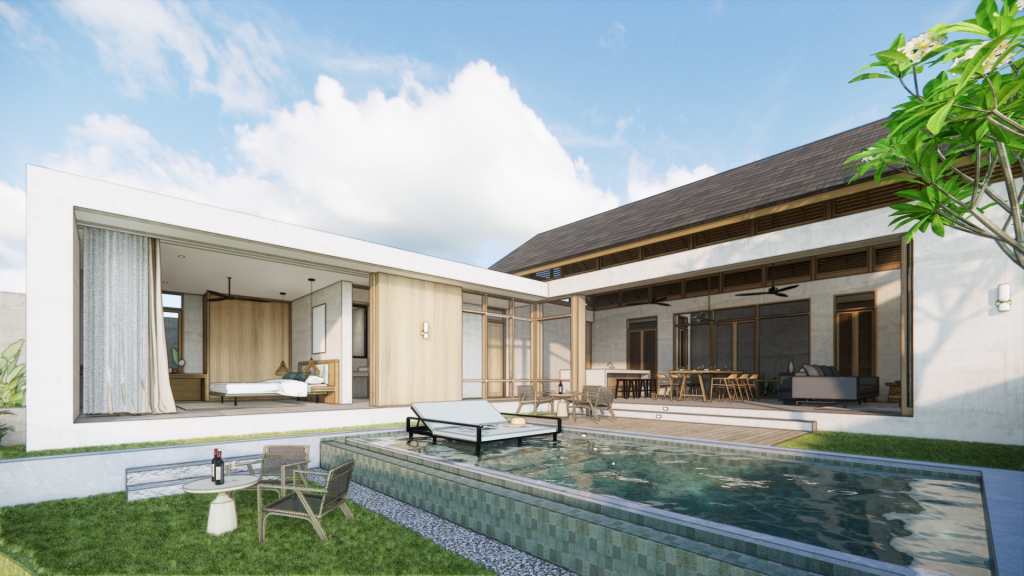
The intersection of cutting-edge technology and tropical architecture might not be the most obvious pairing , but step inside one of Bali’s most sophisticated private villas today, and you’ll find that the two have become deeply intertwined. The island that built its global reputation on ancient temples, organic rice terraces, and hand-carved stone has quietly become one of Southeast Asia’s most interesting testbeds for residential smart home technology.
For homeowners, investors, and tech enthusiasts alike, the smart Bali villa represents something genuinely compelling: a context where home automation isn’t just a convenience feature, but a practical response to a climate and lifestyle that demands a fundamentally different relationship between people and their built environment.
Why Bali’s Climate Makes Smart Home Tech More Than a Luxury
In temperate climates, smart home technology is largely about convenience and energy optimisation , adjusting your thermostat remotely, automating your lights, locking your front door from across town. Useful, but not exactly mission-critical.
In Bali’s tropical climate, the calculus shifts considerably. Several specific environmental factors make intelligent home systems genuinely functional rather than merely aspirational:
Temperature and humidity management is a year-round operational challenge. With ambient humidity consistently high and temperatures that rarely dip below comfortable without some intervention, managing the thermal environment of a villa is a genuine daily task. Smart HVAC systems that respond to occupancy, time of day, and real-time temperature data , rather than running at fixed settings regardless of actual need , can dramatically reduce energy consumption while maintaining better comfort outcomes than manual systems allow.
The monsoon season creates predictable but intense challenges. Between November and March, Bali’s rainfall is intense and sudden. Automated storm shutters, smart drainage monitoring systems, and weather-integrated window control systems that close automatically when rain is detected aren’t novelty features in this context , they’re practical infrastructure that protects expensive finishes and prevents water ingress before a human even notices the weather has changed.
Security in a vacation property context has unique demands. A Bali villa that’s occupied part-time , used by the owner for some of the year and rented to guests for the rest , has security needs that simply can’t be met by conventional lock-and-key systems. Remote access control, smart CCTV with mobile monitoring, guest-specific digital access codes that expire automatically, and motion detection systems integrated with lighting all address real-world security challenges that villa owners face in a way that no analogue system can.
Energy costs are meaningful, especially at villa scale. Running a large villa with a pool, multiple air conditioning zones, outdoor lighting, and kitchen infrastructure adds up to substantial ongoing electricity costs. Smart energy management systems , solar integration with battery storage, intelligent load management, occupancy-based lighting and climate control , can materially reduce these costs while also improving the villa’s environmental credentials, increasingly a differentiator in the premium rental market.
The Core Technologies Transforming Bali Villa Living
The smart home technology stack being integrated into high-specification Bali villas today draws from the same global ecosystem of connected devices and platforms available anywhere in the world , but the application priorities and integration requirements differ in interesting ways.
Centralised Home Automation Controllers
The foundation of any serious smart villa system is a centralised automation controller , a hub that integrates all connected systems into a single, manageable interface. Platforms like Control4, Crestron, and Savant dominate the high-end residential market globally and are increasingly specified in premium Bali villa projects. These systems allow a single touchscreen, tablet, or smartphone to control lighting, climate, entertainment, security, and access across the entire property.
For villa rental operations specifically, the ability to set up and tear down guest access profiles , giving arriving guests control over their private spaces while maintaining management oversight of shared systems , is a genuinely valuable operational feature that goes well beyond the convenience use case these platforms are typically marketed on.
Smart Climate Control and Zoning
Perhaps the most practically impactful technology in a tropical villa context, intelligent HVAC management allows each zone of the villa to be controlled independently, on schedules, and in response to occupancy sensors. A bedroom that cools itself to the optimal sleeping temperature thirty minutes before the guest retires, then gradually warms as morning approaches and the ceiling fan takes over , this is the kind of experience that generates the kind of review a premium rental property needs.
The integration of smart climate control with solar power systems is particularly relevant in Bali, where solar irradiance is consistent and substantial. Systems that automatically shift heavy cooling loads to solar-produced power during peak generation hours , reducing grid draw and battery storage requirements simultaneously , are becoming a standard specification in serious villa projects.
Integrated Security and Access Management
A Bali villa’s security requirements are genuinely complex. During peak rental season, guest turnover might be weekly or even more frequent. Each guest cycle needs its own access credential , one that works for the duration of their stay and becomes invalid the moment they leave, without requiring physical key handovers or the villa manager to be physically present for every check-in.
Smart lock systems with remote management capability, integrated with a villa management platform, solve this elegantly. The guest receives a digital code or smartphone credential upon confirmed payment; it activates on their check-in date and expires automatically. The villa manager can monitor entry logs remotely, can instantly revoke access if needed, and doesn’t need to coordinate physical key collection at the end of each stay.
Combined with smart CCTV systems that provide motion-triggered alerts and remote live viewing, this creates a security infrastructure that simply wasn’t achievable at the residential scale a decade ago.
Automated Lighting Systems
Lighting is one of the highest-impact elements of villa atmosphere , the difference between a space that feels genuinely luxurious and one that merely looks good in photographs often comes down to the quality and controllability of its lighting system. Smart lighting that allows scene-based control (a single “sunset” scene that sets every light in the outdoor living area to the perfect warmth and intensity as the sun goes down) creates an experience that manual switching can never replicate.
For rental operations, automated lighting schedules also provide meaningful security benefit , villas that appear occupied even when they’re not are significantly less attractive targets for opportunistic theft.
Pool and Garden Automation
In a Bali villa, the pool and garden aren’t peripheral features , they’re often the primary amenity that the property is rented on. Smart pool management systems that monitor water chemistry in real time, automatically adjust chemical dosing, and alert the villa manager when parameters fall outside acceptable ranges solve one of the most common operational headaches in villa management: pool water quality issues that are only discovered when a guest complains.
Automated irrigation systems for tropical gardens similarly remove a time-intensive manual task from the villa team’s daily workload while ensuring that garden health is maintained regardless of staffing or management schedules.
What This Means for Villa Construction: Technology Must Be Designed In
Here’s the most important insight from the intersection of technology and villa architecture , and it’s one that’s easy to miss if you approach the technology as an afterthought to the construction:
Smart home systems only deliver their full potential when they’re integrated into the building from the design stage. Retrofitting technology into a completed structure almost always means visible conduit runs, compromised positioning of sensors and control panels, WiFi dead zones in thick stone walls, and electrical infrastructure that wasn’t planned for the load requirements of integrated systems.
The most impressive smart villas in Bali , the ones where the technology genuinely disappears into the experience rather than announcing itself awkwardly , are the ones where the technology specification was part of the brief from the earliest design conversations. Where cable pathways were planned before walls were poured. Where server room and network infrastructure locations were designed into the floor plan. Where electrical load calculations included every connected device and system from the beginning.
This makes the choice of construction partner one of the most consequential decisions for anyone planning a technology-integrated villa build. A Bali villa builder who has experience delivering technology-integrated projects , who understands how to coordinate between architects, MEP engineers, and AV/home automation specialists during the construction process , will produce a fundamentally different result from one who treats the technology as a fit-out item to be addressed after the structure is complete.
The Rental Market Dimension: Technology as a Revenue Driver
For villa owners who intend to generate rental income from their property, smart home technology increasingly functions as a direct commercial differentiator rather than simply a personal preference.
Guest expectations in the premium villa segment are rising. Guests who are paying premium rates for a private Bali villa increasingly expect the same level of technological convenience they experience in high-end hotels , keyless entry, app-controlled climate and lighting, reliable high-speed WiFi throughout the property, and entertainment systems that are intuitive to use. A villa that delivers these expectations consistently generates better reviews; better reviews drive higher occupancy at higher nightly rates.
Operational efficiency gains are real and compound over time. Remote management capability means villa managers can oversee multiple properties more efficiently. Automated systems mean fewer manual tasks that require staff time. Predictive maintenance alerts (from smart pool chemistry monitors, energy consumption anomalies that might indicate failing appliances, or security system alerts) mean problems are addressed before they become guest-facing issues.
Technology integration is becoming a visible marketing differentiator. The phrase “smart villa” in a rental listing is increasingly searchable and increasingly sought. Guests specifically filtering for properties with smart home features represent a growing and high-value booking segment , one that a well-equipped villa can capture and retain through consistently excellent technological experience.
Practical Guidance: Specifying Technology for a New Bali Villa Build
For anyone planning a new villa construction with smart home integration in mind, the practical considerations worth addressing early:
Define your operational model first. A smart system for a purely personal retreat has different priorities than one for a full-time rental villa. The operational model determines which technology investments deliver the most return, and it needs to be clear before the specification process begins.
Engage your AV and home automation consultant at design stage. The right time to involve a smart home systems specialist is when the architect is producing schematic designs , not when the walls are already up. The conversations they need to have with the structural and MEP teams require access to the design before it’s fixed.
Infrastructure over devices. When budget prioritisation is necessary, invest first in infrastructure , the conduit pathways, the electrical capacity, the network backbone , that allows future device additions without structural work. Devices can be added progressively; infrastructure cannot be retrofitted economically.
Specify your network infrastructure as seriously as your structural systems. A villa where the WiFi drops in the bedroom or the home automation system loses connectivity in the garden because the network was an afterthought is a villa that will generate negative reviews regardless of how beautiful the architecture is. Enterprise-grade wireless access point coverage throughout the property, including outdoor areas and the pool zone, is a non-negotiable in a modern premium villa build.
Working with an experienced villa construction specialist in Bali who has a track record of delivering technology-integrated projects means these conversations happen in the right sequence, with the right people in the room, at the right stage of the project.
Final Thoughts: Where Technology and Tropical Architecture Meet
Bali has always been a place where seemingly opposite things coexist more comfortably than they should , ancient and contemporary, spiritual and commercial, profoundly local and deeply international. The integration of sophisticated home technology into the island’s villa architecture fits this pattern perfectly.
The best technology-integrated villas in Bali don’t feel like tech showcases dressed up in tropical aesthetics. They feel like places where everything works exactly as you’d want it to, without drawing attention to itself , where the climate is always right, the security is always sound, the pool is always perfect, and the lights always seem to know what you need before you think to ask.
That kind of seamless experience doesn’t happen by accident. It’s the product of deliberate integration between architectural vision, construction expertise, and technology specification , brought together at the right stage of the project by the right team of people.
And in that sense, the smartest thing about the best smart Bali villas isn’t the technology at all. It’s the quality of the decisions made before a single device was ever installed.
This article explores the intersection of residential smart home technology and tropical villa architecture, with a focus on practical applications and construction considerations for technology-integrated villa builds.